I used to think that if I didn’t have a printed sheet of instructions staring me in the face, I was essentially inviting a kitchen disaster. I spent way too many years treating my stovetop like a high-stakes coding project, terrified that one wrong measurement would crash the whole system. But honestly? Most of those “gourmet” cookbooks are just bloated manuals designed to make you feel incompetent. Learning how to cook without a recipe isn’t about some magical culinary intuition or owning a set of $200 tweezers; it’s about understanding the basic logic of how flavors and heat actually interact.
I’m not here to give you a list of “hacks” or tell you to follow your heart every time you pick up a knife. Instead, I want to give you a functional framework that works when you’re tired, the fridge is nearly empty, and you just want to eat. We’re going to focus on the repeatable systems—the ratios, the seasoning principles, and the heat management—that allow you to stop troubleshooting your dinner and start actually enjoying it. Let’s get to the practical stuff.
Stop Troubleshooting Dinner Mastering How to Cook Without a Recipe

The secret isn’t some magical culinary talent; it’s actually much more mechanical than that. It’s about understanding cooking ratios rather than memorizing exact measurements. Think of it like troubleshooting a piece of hardware: once you know the basic architecture of a sauce or a vinaigrette, you stop worrying about the specific milliliters and start looking at the balance. If a dish feels flat, you don’t need a new manual; you usually just need an acid to brighten it or a fat to carry the weight.
Once you move past the rigid step-by-step instructions, you start relying on pantry staple cooking to get the job done. I don’t expect my kitchen to look like a Michelin-star setup, especially on a Tuesday night when the kids are hungry and my brain is fried. Instead, I look at what’s actually in the cupboard—a rogue can of chickpeas, some wilted spinach, and half an onion—and I start building flavor profiles based on what those ingredients need to thrive. It’s less about following a map and more about knowing how to navigate the terrain. When you stop treating every meal like a high-stakes technical deployment, you actually start enjoying the process.
Ditch the Manual and Start Building Flavor Profiles Instead
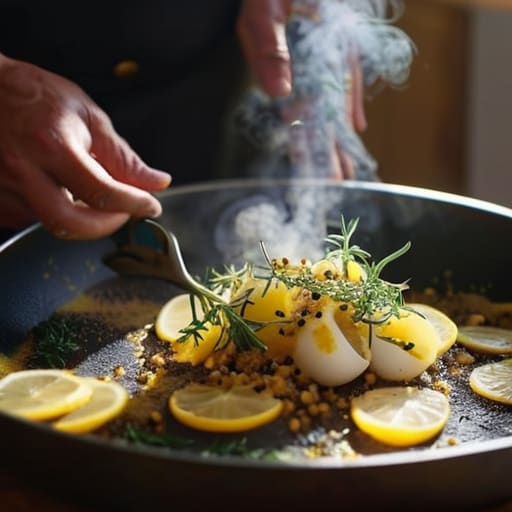
Instead of treating a recipe like a rigid piece of software code that you have to execute perfectly, I want you to start thinking about building flavor profiles. When I’m staring at a half-empty fridge at 7:00 PM, I’m not looking for a manual; I’m looking for a framework. It’s about understanding how different elements interact—acid to cut through fat, salt to lift dull flavors, and heat to add depth. Once you grasp these basic flavor profiling techniques, you stop worrying about whether you have the exact amount of shallots called for and start focusing on what the dish actually needs to feel complete.
This is where pantry staple cooking becomes your best friend. Most of the time, you already have the building blocks sitting in your cupboards: a jar of tahini, some dried oregano, or a bottle of decent vinegar. Rather than getting paralyzed by a missing ingredient, lean into your kitchen improvisation skills. If a recipe asks for lemon juice and you’re out, grab some apple cider vinegar. It’s not about being a gourmet chef; it’s about applying a little logic to the chaos. Once you stop following the instructions blindly and start cooking by instinct, you’ll realize that the most memorable meals rarely come from a printed page.
The Functional Magic of Understanding Cooking Ratios
Think of cooking ratios like the logic gates in a circuit board; once you understand the underlying architecture, you stop worrying about the individual components. You don’t need a specific manual for every single dish if you grasp the fundamental proportions. For instance, knowing the basic ratio of fat to acid in a vinaigrette, or the balance of aromatics to liquid in a braise, allows you to pivot mid-stream without panicking. This isn’t about memorizing a hundred different formulas; it’s about understanding cooking ratios well enough to make real-time adjustments.
When you lean into this kind of structural thinking, you move away from frantic troubleshooting and toward true kitchen improvisation skills. If a sauce feels flat, you don’t reach for a new recipe; you look at your ratios. Is it missing an acid to cut through the fat? Is the salt levels off compared to the bulk of the starch? By mastering these basic mathematical relationships, you turn your kitchen into a space of controlled experimentation rather than a series of potential errors. It transforms pantry staple cooking from a chore into a predictable, repeatable system that actually works when you’re tired and the fridge is looking a bit thin.
Real Kitchen Improvisation Skills for When Life Gets Messy
When the workday has been a marathon and you realize you’re missing that one specific sprig of rosemary the recipe demanded, don’t panic. This is where true kitchen improvisation skills come into play. Instead of treating a missing ingredient like a system failure, treat it as a variable. If you don’t have acid, grab a splash of vinegar; if you lack heat, reach for red pepper flakes or even a bit of mustard. The goal isn’t perfection; it’s about maintaining the structural integrity of the dish. I’ve learned that the most resilient cooks aren’t the ones with the most expensive gadgets, but the ones who can look at a half-empty cupboard and see a meal instead of a problem.
The secret to staying calm when things get chaotic is leaning heavily on pantry staple cooking. Keep the basics—oils, grains, canned beans, and dried spices—on hand so you aren’t tethered to a grocery list. When you stop viewing your kitchen as a place that requires strict adherence to instructions and start seeing it as a workspace for building flavor profiles, the stress evaporates. It’s about moving away from the “if/then” logic of a manual and moving toward a more intuitive, functional way of eating. Once you trust your palate, you stop troubleshooting and start actually enjoying the process.
Reliable Pantry Staple Cooking for High Stress Evenings
Some nights, the mental bandwidth required to even look at a recipe is simply non-existent. You’ve spent ten hours troubleshooting client workflows, the kids are loud, and the last thing you want to do is follow a twelve-step instruction manual for a risotto that requires constant stirring. This is where pantry staple cooking becomes your best friend. Instead of viewing a half-empty cupboard as a failure, see it as a closed system of components waiting to be integrated.
The goal isn’t to create a gourmet masterpiece; it’s to build something functional and nourishing using what’s already within arm’s reach. If you have a tin of chickpeas, a jar of crushed tomatoes, and some dried oregano, you don’t need a plan—you just need to apply basic flavor profiling techniques. Start with a fat, add your aromatics, and let the pantry items do the heavy lifting.
When you rely on cooking by instinct rather than a printed list, you eliminate the decision fatigue that usually leads to expensive, unhealthy takeout orders. Keep a few reliable “anchor” ingredients—grains, legumes, and acidic elements like vinegar or lemon—always on hand. Once you trust your ability to pivot based on what’s actually in the pantry, the stress of “what’s for dinner” evaporates.
Mastering Flavor Profiling Techniques Without the Constant Guesswork
If you want to stop staring blankly at a spice rack, you have to stop treating ingredients like individual soldiers and start seeing them as parts of a team. This is where building flavor profiles becomes more of a logic puzzle than a guessing game. I like to think of it in terms of balance: you generally need a salt, an acid, a fat, and something with a bit of heat or sweetness. If a dish feels “flat,” it’s rarely because it lacks more salt; it’s usually because it’s missing that bright hit of acid—a squeeze of lemon or a splash of vinegar—to wake everything up.
The trick to mastering these flavor profiling techniques is to train your palate through small, controlled experiments rather than massive, uncoordinated additions. Instead of dumping half a jar of cumin into a pot, add a pinch, taste it, and actually pay attention to how it changes the landscape of the dish. It’s about developing your cooking by instinct through repetition. Once you understand how a heavy fat like coconut milk interacts with a sharp acid like lime, you aren’t just following a set of instructions anymore—you’re actually managing the chemistry of your dinner.
Simple Seasoning to Taste Tips for Real World Results
Here is the reality: you can follow every single step in a cookbook and still end up with a dish that tastes “flat.” That’s usually because the recipe writer didn’t account for the specific potency of your spices or the moisture content of your vegetables. This is where seasoning to taste tips move from being a suggestion to a necessity. Instead of dumping in a teaspoon of salt because the manual says so, start small. Think of seasoning as a series of micro-adjustments rather than a one-time event. I always keep my tasting spoon handy—it’s my version of a debugger for a messy line of code.
When you’re practicing cooking by instinct, you need to learn how to troubleshoot the specific type of dullness you’re tasting. If a dish feels heavy or muddy, it probably needs acid—a squeeze of lemon or a splash of vinegar to brighten things up. If it’s just one-dimensional, it might need a hit of salt to pull the existing flavors forward. It’s not about guessing; it’s about applying a logical process to the palate. Don’t be afraid to taste as you go. If you wait until the plate is on the table to realize it’s bland, you’ve already lost the battle.
Trusting Your Gut Through the Art of Cooking by Instinct
At some point, you have to stop looking at the screen or the printed page and actually start using your senses. This is where the real magic happens—moving from following a set of instructions to true cooking by instinct. It isn’t about being a professional chef or having some innate, mystical connection to a head of garlic; it’s about paying attention to the feedback your food is giving you. Is the aroma sharp and bright, or is it starting to smell heavy and dull? Is the sizzle in the pan sounding aggressive or just a gentle hum? When you lean into these sensory cues, you stop being a technician and start being a cook.
The transition from rigid rules to intuition can feel a bit reckless at first, especially if you’re used to everything being precisely measured. But remember, you aren’t just guessing; you are applying the kitchen improvisation skills you’ve been quietly building every time you’ve adjusted a sauce or swapped an ingredient. Trusting your gut means recognizing that a recipe is just a suggestion, not a law. Once you realize that you can adjust on the fly based on what you see, smell, and taste, the kitchen stops being a place of high-stakes troubleshooting and starts feeling like a space where you can actually breathe.
Five Practical Rules for When the Cookbook Stays Closed
- Master the “Acid Check.” If a dish tastes flat or heavy but you’ve already added salt, don’t reach for more sodium—reach for lemon juice or vinegar. A splash of acid brightens everything and cuts through fat, acting like a quick system reboot for your palate.
- Build in Layers, Not All at Once. Don’t dump everything into the pan at the start. Start with your aromatics—onions, garlic, ginger—to build a foundation, then layer in your proteins and harder vegetables. It’s about constructing a stable base rather than throwing a pile of components into a pot.
- Use Your Senses as Diagnostic Tools. Stop looking at the clock and start looking at the food. Is the onion translucent? Is the meat yielding to pressure? Is the sauce coating the back of a spoon? Your eyes and touch will tell you more about the state of your meal than any timer ever could.
- Keep a “Mental Inventory” of Your Pantry. You don’t need a massive spice rack; you need a reliable set of defaults. Know exactly what your go-to fats, acids, and heat sources are. When you know your tools, you don’t have to pause and think about what’s possible.
- Embrace the “Small Batch” Taste Test. Never commit to a full seasoning adjustment all at once. Add a pinch, stir, and taste. It’s much easier to add more salt than it is to fix a dish that’s been over-seasoned. Treat it like debugging code: one line at a time.
Moving Beyond the Instruction Manual
At the end of the day, cooking without a recipe isn’t about being a culinary virtuoso; it’s about applying a bit of operational logic to your kitchen. We’ve covered the groundwork: understanding your ratios, building flavor profiles, and leaning on those reliable pantry staples when your brain is too fried to think. It’s about shifting from a mindset of strict adherence to one of functional improvisation. Once you stop viewing a missing ingredient as a system failure and start seeing it as a variable to be adjusted, the entire process changes. You aren’t just following orders anymore; you’re actually managing the outcome.
My goal for you isn’t to turn you into a chef, but to help you reclaim your evening. There is a profound sense of relief that comes when you realize you don’t need a digital screen or a printed manual to feed yourself and your family something decent. Let the kitchen be a place of utility, not a source of stress. Master these small, repeatable systems, and eventually, the guesswork will fade into the background. Stop troubleshooting your dinner and start actually enjoying the meal you’ve built from scratch. Now, go put the phone away and just start cooking.
Frequently Asked Questions
What do I do if I realize halfway through that I’ve completely over-seasoned something?
Don’t panic; you haven’t ruined it, you’ve just over-clocked the flavor. If it’s too salty, add an acid like lemon juice or vinegar to cut through the sharpness, or toss in a starch—like a potato—to soak up the excess. If it’s too spicy, reach for dairy or something sweet. Think of it like debugging code: you aren’t starting over, you’re just applying a patch to bring the system back into balance.
How do I know if a specific protein or vegetable is actually safe to cook with if I'm just winging it?
Look, I’m all for improvisation, but I’m not a fan of food poisoning. If you’re winging it, use your senses—not as a suggestion, but as a diagnostic tool. If meat smells off, feels slimy, or has a greyish tint, toss it. Don’t try to “fix” it with spices; you can’t mask rot. For veggies, if they’re mushy, slimy, or showing actual mold, they’re done. If in doubt, bin it. It’s not worth the troubleshooting later.
Are there certain flavor combinations that are "safe bets" for a beginner who is nervous about experimenting?
Look, I get it. Experimenting feels like a high-stakes gamble when you’re hungry and tired. If you want a safety net, stick to the classics that rarely fail. Think lemon and garlic for proteins, tomato and basil for anything pasta-related, or soy sauce, ginger, and sesame for a quick stir-fry. These aren’t just “recipes”; they are proven frameworks. Once you realize why they work, you’ll stop fearing the pan and start trusting your palate.
How do I keep track of what actually worked so I don't have to reinvent the wheel every single time?
Don’t overcomplicate this with a dedicated app or a complex spreadsheet; you’ll never actually maintain it. Use the same physical notebook I carry everywhere. When a riff on a pasta sauce actually hits, jot down the core ratio and the one “wildcard” ingredient that saved it. It’s not about recording every gram; it’s about documenting the logic. Treat it like a system log—quick, functional, and easy to reference when you’re tired.